An open scientific repository dedicated to the chemical characterization of medicinal plant species, whole-herb synergy, and standardized phytochemical bioassays. Established in 2014 in Wilmington, Delaware.

Accession Voucher #VB-MCH-2024: Matricaria chamomilla L. • Delaware Vault
Combining advanced chromatographic characterization with regenerative agricultural biology.

Quantifying active flavonoid glycosides, catechins, and steroidal lactones with validated diode-array detection spectra.

Investigating mycorrhizal fungal networks and soil microbiome dynamics in living organic agricultural soils.

Maintaining verified taxonomic reference flora and climate-controlled physical herbarium voucher records.

Publishing unredacted analytical data, retention indices, and spectra for academic researchers worldwide.
The following botanical accessions represent core reference monographs maintained in our Delaware herbarium vault:
Whole dried flower heads yielding high concentrations of apigenin-7-glucoside, chamazulene, and bisabolol. Documented historical restorative application for neuromuscular and gastrointestinal relaxation. Standardized HPLC quantification verifies >1.8% flavonoid fraction by dry mass.
Standardized root monograph detailing steroidal lactones (withaferin A and withanolide D). Clinically evaluated for hypothalamic-pituitary-adrenal (HPA) axis cortisol curve modulation and cellular stress adaptation kinetics.
Spring-harvested shaded highland shoots rich in (-)-epigallocatechin-3-gallate (EGCG) and L-theanine amino acid fractions. Assayed for cellular free-radical neutralization kinetics and vascular endothelial oxidative protection.
Intact sun-dehydrated ruby calyces concentrated with monomeric anthocyanins (delphinidin-3-sambubioside and cyanidin-3-sambubioside) and natural organic fruit acids. Investigated for systemic microvascular tone maintenance.
Analytical parameters established via high-performance liquid chromatography with diode-array detection (HPLC-DAD) at 280nm and 360nm absorption spectra.
| Botanical Marker | Target Biomarker | Standard Assay |
|---|---|---|
| M. chamomilla | Apigenin-7-Glucoside | ≥ 1.80% (HPLC-DAD) |
| W. somnifera | Total Withanolides | ≥ 2.50% (HPLC-DAD) |
| C. sinensis | (-)-EGCG Fraction | ≥ 14.2% (HPLC-DAD) |
| H. sabdariffa | Monomeric Anthocyanins | ≥ 1.50% (Spectrophotometry) |
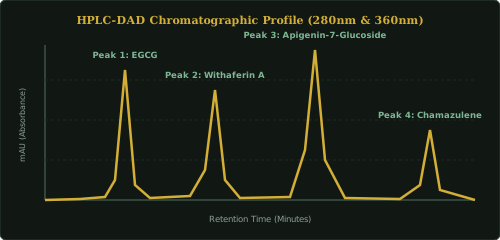
Figure 1.2: Multi-wavelength overlay of primary secondary metabolite standards (DE-VB-892).
Insights into our analytical instrumentation, dehydration standards, and specimen loan protocols.
Every monograph accession is subjected to High-Performance Liquid Chromatography with Diode-Array Detection (HPLC-DAD), Gas Chromatography-Mass Spectrometry (GC-MS) for volatile terpenes, and Inductively Coupled Plasma Mass Spectrometry (ICP-MS) for heavy metals and elemental soil uptake.
Our studies indicate that drying temperatures exceeding 38°C cause rapid thermal volatilization of monoterpenes and oxidation of delicate flavonoids. Low-temperature ambient dehydration preserves maximum chemical integrity and enzyme conformations.
Yes. Accredited university departments, botanical gardens, and clinical research facilities may request herbarium specimen vouchers and raw analytical datasets using the academic consultation form below.
Use this form to request chromatography raw files, specimen vouchers, or schedule an academic consultation with Dr. Vance:
Verdant Botanicals LLC
742 Evergreen Terrace, Suite 300
Wilmington, DE 19807, United States
Direct Inquiries:
Telephone: +1 (302) 555-0194
Electronic Mail: [email protected]
All inquiries are processed in accordance with our Privacy Policy.